
Autocross Racing Explained: How Timed Runs Decide the Winner
Learn how SCCA autocross works: cone-defined courses, timed runs, two-second penalties, class results and combined scores at multi-course events.
Autocross racing, in the US SCCA Solo format, is a competition against the clock on a short, paved course marked with traffic cones. Drivers take separate timed runs rather than race wheel-to-wheel. The lowest score after penalties wins within the class—not necessarily the driver with the fastest unadjusted run. SCCA’s 2026 Solo Rules, §§1.2.1–1.2.2
Solo is SCCA’s name for its autocross program. This explainer covers that format, using its 2026 national scoring rules. Regional organizers may vary run counts, scoring and penalties; check the host’s event regulations. SCCA autocross overview; 2026 Solo Rules, §§1.1, 1.3.2
How an autocross event works
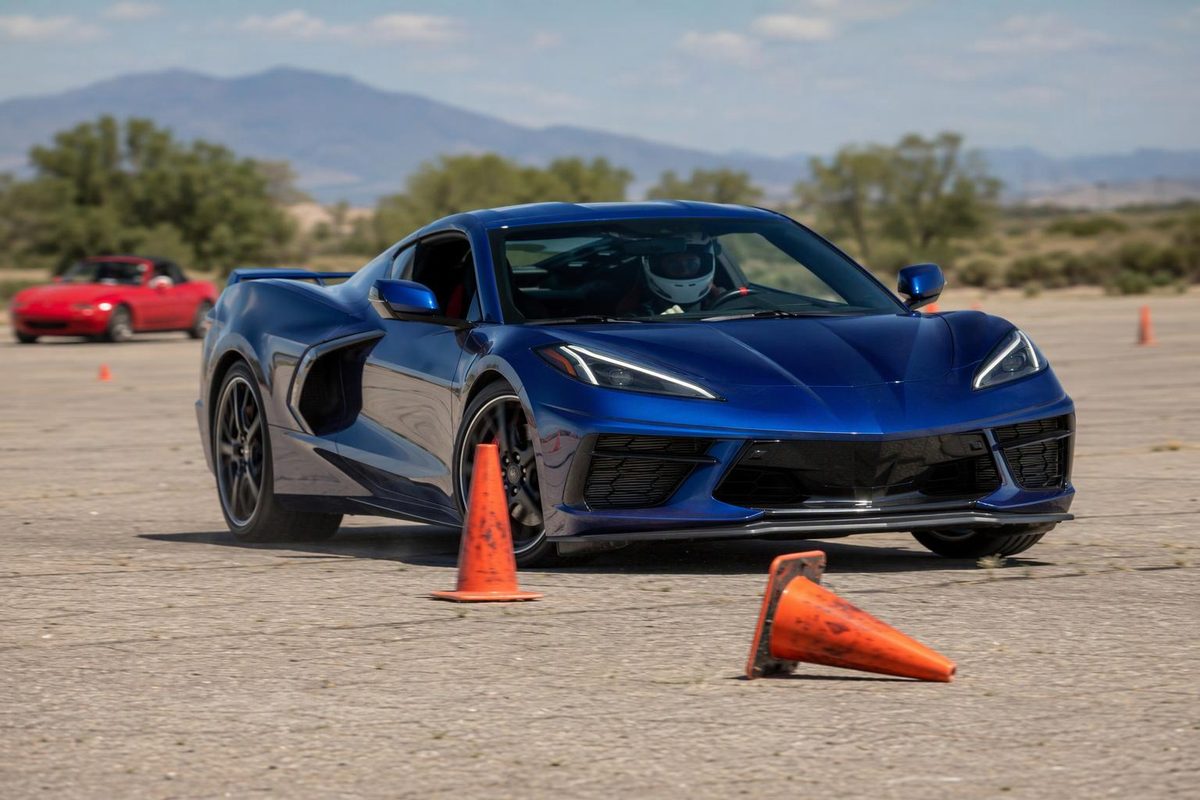
A large parking lot or inactive airstrip becomes a miniature road course, with cones defining turns and the route. The layout emphasizes handling, driver skill and maneuverability rather than outright speed or engine power. Drivers walk the course beforehand to learn it, then wait in the grid, the staging area between runs. SCCA event guide
Each car makes its own timed attempt. “One at a time” does not necessarily mean only one car is anywhere on the course: SCCA permits multiple cars to be running when adequate time and distance separate them. They are not battling for track position. 2026 Solo Rules, §1.2.1
Under the 2026 national Solo rules, drivers receive at least three official timed runs per course, subject to severe circumstances beyond the organizers’ control. Timing is recorded to 0.001 second, and only the fastest official run on each course counts. For a single-course event, that means taking the best result—not averaging the runs or adding them all together. 2026 Solo Rules, §§7.1–7.3
Cone penalties: why the fastest raw run can lose
For an ordinary scored run:
Corrected time = elapsed time + cone penalties
Under the national rules, SCCA assesses two seconds per cone knocked over or displaced entirely outside its marked outline. Merely touching a cone is not automatically a penalty: whether it falls or moves outside the marking matters. Regional events may use local methods for marking cone positions. 2026 Solo Rules, §7.8.1
Here is a hypothetical three-run example:
| Run | Elapsed time | Cone penalties | Corrected time |
|---|---|---|---|
| 1 | 52.418 s | 0 | 52.418 s |
| 2 | 51.206 s | 1 × 2 s | 53.206 s |
| 3 | 51.890 s | 0 | 51.890 s |
Run 2 is fastest before penalties, but Run 3 supplies the driver’s score for that course. The cone costs more than the time saved.
Missing part of the prescribed route can instead produce a DNF—Did Not Finish. An uncorrected course deviation normally receives a DNF, unless the event’s supplementary regulations specify a time penalty. A DNF is not simply another two-second cone penalty. 2026 Solo Rules, §7.8.3
Classes and multi-course scoring
Autocross accommodates both daily drivers and dedicated competition vehicles, with classes covering different degrees of modification. Official national Solo results rank competitors by class and show corrected times and penalties. A class victory therefore does not require setting the quickest time of the entire field. SCCA overview; 2026 Solo Rules, §7.9
At a multi-course event, the score is the sum of the best times on each course. For example, best corrected times of 51.890 and 54.275 seconds produce a total of 106.165 seconds. SCCA National Tour events use two courses over two days, one course each day, with combined times determining class winners. 2026 Solo Rules, §7.1.2; SCCA National Tour overview
ProSolo is a variation, not the standard separate-start format. Two drivers start side-by-side on mirror-image courses, then swap sides; class results combine their fastest times from both courses, followed by elimination Challenges. SCCA ProSolo overview
What a first-time entrant needs
A dedicated race car is not essential. SCCA’s entry guidance calls for a current driver’s license, membership—including weekend membership where applicable—and an eligible helmet. The car must pass safety inspection. Check the host’s registration instructions, vehicle eligibility and helmet requirements before entering; loaner helmets are sometimes available. Expect a course walk, a drivers’ meeting and a work assignment as well as driving: competitors also help operate the event. SCCA getting-started guide