
305 Kilometres, Two Hours Maximum: the Rules That Set Every Grand Prix's Length
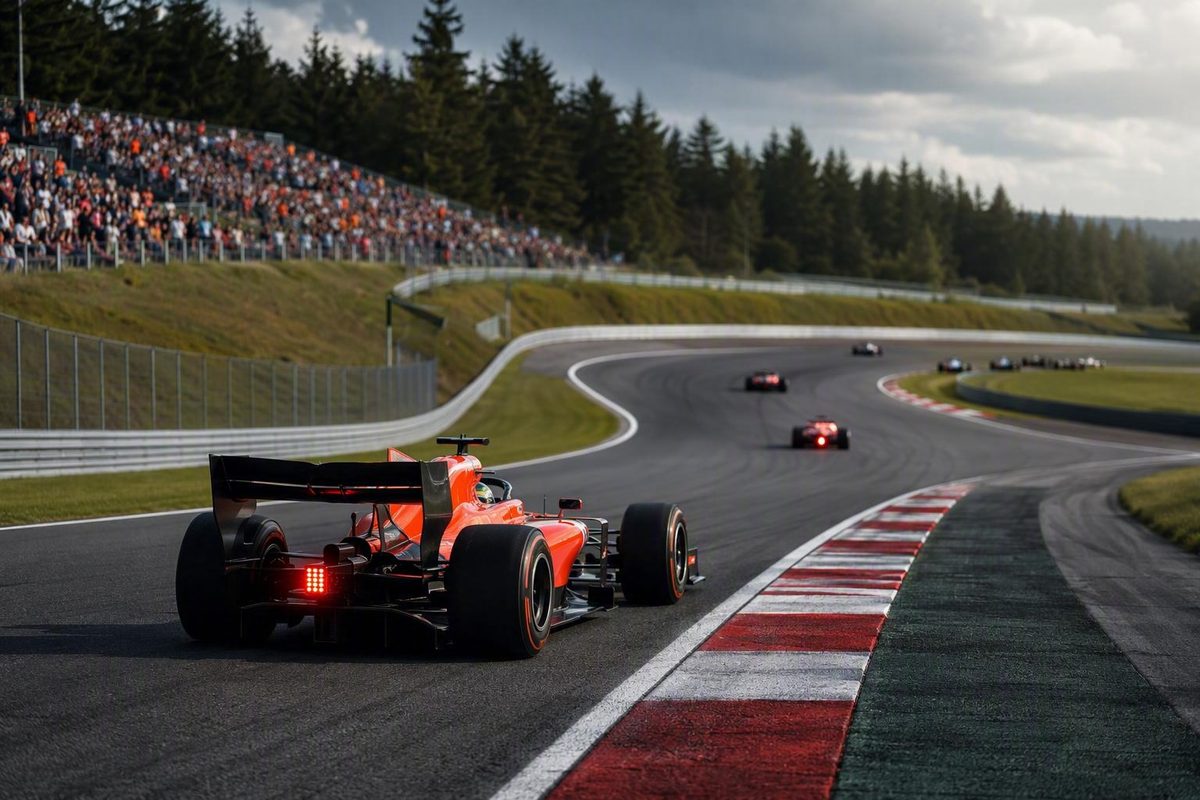
A Formula 1 race is the fewest laps exceeding 305 km — usually 50 to 70 laps and around 90 minutes, with a two-hour cap. Here's how the distance rules work.
A Formula 1 race has no fixed lap count. The regulations define it by distance: the fewest number of laps that exceeds 305 kilometres (about 190 miles). That single rule, plus a handful of exceptions, explains every Grand Prix length on the calendar.
The distance rule in practice
Because circuits vary from Spa’s 7.0 km to Monaco’s 3.3 km, the lap count swings widely: Spa needs 44 laps to clear 305 km, while Zandvoort needs 72. Most races land between 50 and 70 laps and run roughly 80 to 100 minutes at racing speed. The one deliberate exception is Monaco, granted a shorter 260 km distance because its slow, narrow streets would otherwise push the race past its time limits — even at 260 km it regularly approaches the maximum duration.
The clock also has a say
Two time caps sit on top of the distance rule. Racing time is capped at two hours; if a race is interrupted, the total window from start to finish is capped at three hours. When the clock beats the distance, the race simply ends at the two-hour mark — rain-hit races like São Paulo 2016 or the stop-start 2021 Belgian Grand Prix are the famous cases. Berlin-wall rain aside, a dry modern Grand Prix almost never threatens the cap.
Sprints and the shorter formats
Sprint races, added in 2021, run about 100 km — roughly a third of Grand Prix distance, around 25 to 30 minutes, with no mandatory pit stop. They are a separate classification with their own points, not a short Grand Prix; the 305 km rule still governs Sunday.
How F1 compares
The 305 km target sits in motorsport’s middle. IndyCar road races run similar distances, but the Indianapolis 500 is 805 km of sustained oval speed. NASCAR’s marquee races run 500 to 600 miles and well past three hours. At the other extreme, endurance racing abandons distance entirely and fixes time — six, twelve, or twenty-four hours — with the winner covering the greatest distance. F1’s format is calibrated for sprint intensity: long enough to force strategy, short enough that every lap is driven near the limit.
So the honest answer to “how long is an F1 race”: about 305 kilometres, usually 50–70 laps, roughly an hour and a half — and never, by regulation, more than two hours of racing.