
NASCAR Race Length Is Set in Laps, Not Hours
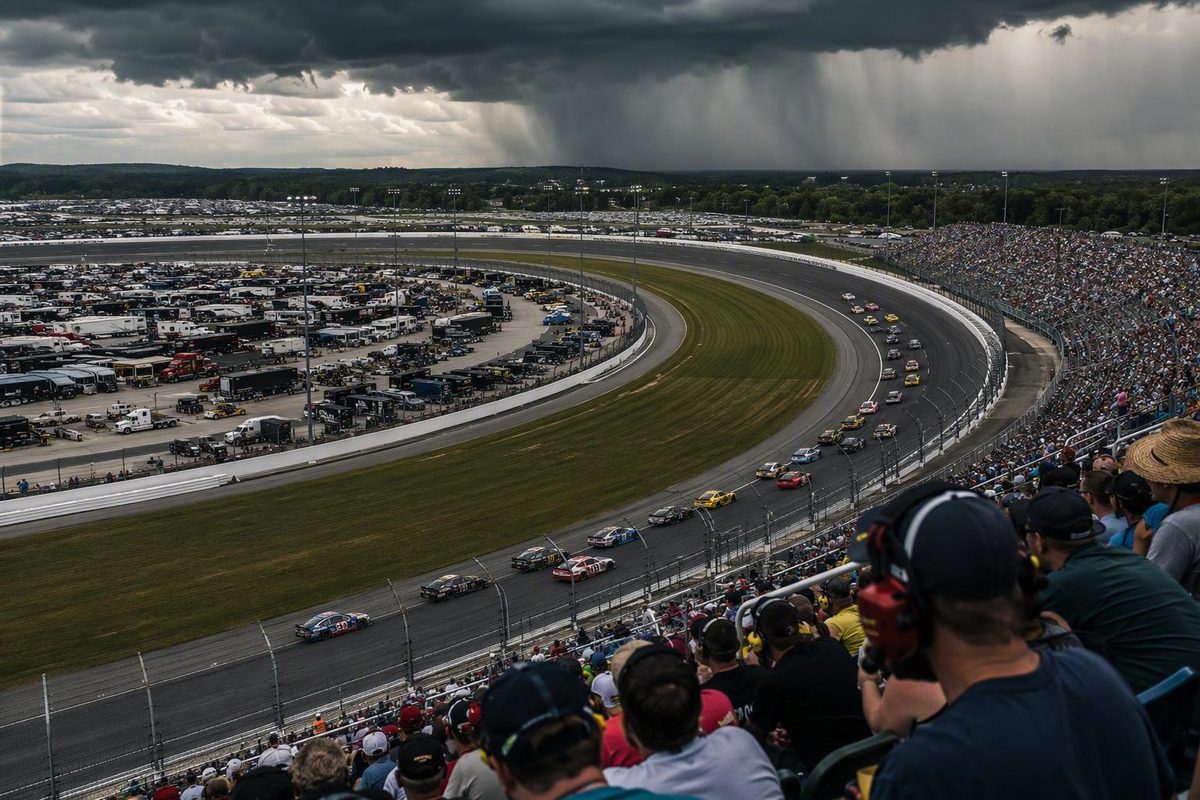
Cup races have no fixed duration; scheduled laps set the distance, while cautions, stage breaks, weather and overtime affect the finish time.
It does not have a fixed duration in hours. For planning purposes, check the scheduled start and distance for the specific race, then monitor live conditions because cautions, stage breaks and weather can move the finish time.
The examples below apply only to the Cup Series.
The short answer: there is no fixed duration
NASCAR Cup races are scheduled in laps and miles rather than given one universal time limit. That makes the answer to “how long does a NASCAR race last?” event-specific: a race ends according to its completed distance and circumstances, not after a predetermined number of hours.
Four measurements help clarify what “race length” can mean:
- Scheduled distance: The advertised number of laps and miles.
-
Completed distance: The laps and miles actually run. Weather can result in fewer completed laps, while overtime can add laps.
-
Total event window: The spectator’s or viewer’s commitment, potentially including pre-race coverage, a delayed start, weather holds, track drying and post-race coverage.
Of those four measurements, scheduled distance is the one fixed before the race. Completed distance, official time and the overall viewing window depend on what happens during the event.
That distinction matters when planning a race day. The published lap count tells you how far the event is intended to run, but it does not provide a dependable finish time on its own.
Worked examples: Sonoma and the Daytona 500
The scheduled lap count changes with the event and circuit. Road courses, short ovals and larger speedways have different lap lengths, so there is no useful way to convert every Cup race into hours using one assumed lap time.
| Event and circuit type | Scheduled laps | Scheduled miles | Source supplies elapsed time? |
|---|---|---|---|
| 2026 Sonoma Cup race — 1.99-mile road course; three cautions covering eight laps | 110 | 218.9 | No |
| Daytona 500 — 2.5-mile speedway; tertiary source | 200 | 500 | No |
Daytona provides the simpler scheduled-distance calculation:
200 laps × 2.5 miles per lap = 500 scheduled miles
Sonoma requires more care. Its official recap publishes a race distance of 218.9 miles over 110 laps while describing the course as 1.99 miles long. Multiplying the lap count by that rounded circuit figure does not reproduce the published distance exactly. The official 218.9-mile event distance should therefore be used as stated rather than recalculated from the rounded track length.
The examples also show why a single lap-based time estimate would be misleading. A lap of Daytona is not directly comparable with a lap of Sonoma, and neither event can represent every type of circuit on the Cup schedule. More importantly, neither cited source supplies an elapsed race time from which to calculate an hours-per-lap estimate.
Why cautions and stage breaks change the clock
Not every completed lap takes place at racing speed.
The Sonoma figures in the table provide a concrete example. Eight of the event’s 110 scheduled laps were covered during three caution periods. Those figures show that caution running formed part of the completed distance, but the official recap does not say how many minutes the cautions added. A caution count cannot be translated into a fixed time penalty.
Stage endings can also affect the flow of a race because they may produce caution periods.
NASCAR adjusted that process in August 2026. The stage was deemed complete at that caution, avoiding a separate caution at the scheduled stage ending. NASCAR said the procedure was intended to reduce duplicated time under caution, but did not quantify the saving.
The season limitation is essential: that announcement does not establish that the same procedure remained in effect after 2026. It is an example of how stage administration can influence elapsed time, not a permanent rule to apply to every future race.
Weather can make the event window much longer
Weather demonstrates why official race time and the viewer’s total commitment are different measurements. A delay can add substantial waiting time even while no competitive laps are being completed.
At the 2025 Daytona 500, weather halted the Cup race for several hours before competition resumed. The NASCAR page does not provide the exact delay length or enough timestamps to reconstruct the entire window from the planned start through the finish.
A Cup event at Kansas provides a delayed-start example. Rain had fallen for much of the afternoon, and the race was delayed while track drying continued. Again, the report does not state the delay’s duration or provide a complete event timeline.
These cases should not be converted into a standard weather allowance. A delay’s effect depends on when rain arrives, how long it lasts and how much track-drying time is required. Weather can delay the start, interrupt a race already underway or affect the completed distance, so the practical time commitment can change throughout the day.
For viewers, the key distinction is simple: time spent waiting through a weather hold belongs to the overall event window, even though it does not add scheduled laps. A weather-affected race day may therefore occupy far more time than the advertised distance suggests.
A race can finish short of—or beyond—its advertised distance
Scheduled distance and completed distance are not always identical. Weather can result in an event ending before all advertised laps are run, while overtime can push the race beyond its scheduled distance.
The supplied tertiary Daytona 500 history records examples in both directions. It reports that the 2003 race ended after 109 laps because of rain. By contrast, the 2005 race completed 203 laps and 507.5 miles—three laps and 7.5 miles beyond the scheduled 200 laps and 500 miles.
These are historical illustrations, not an explanation of current weather or overtime regulations. They establish only that the completed Daytona distance has sometimes been shorter or longer than the advertised distance.
The relationship between distance and time can be counterintuitive. A rain-shortened race may cover fewer miles but still demand a long overall commitment if competitors and spectators spend hours waiting for conditions to improve. An overtime finish adds laps and miles, but the additional distance alone does not reveal how many minutes it added.
Completed distance and elapsed time must therefore be treated as separate records. Calling a race longer by laps or miles does not mean it was longer by time.
How to estimate the commitment for a specific race
A useful estimate starts with the particular event rather than a generic NASCAR lap count. Before deciding how much time to set aside, check:
- The series. Confirm that the schedule is for the Cup Series rather than Xfinity or Craftsman Trucks.
- The scheduled laps and miles. These define the advertised racing distance.
- The track type. Road courses, short tracks, intermediate ovals and superspeedways have different lap lengths and racing characteristics.
- The stage format. Stage lengths and associated caution procedures can influence how the event progresses.
- The scheduled start. Use the official event schedule rather than assuming the race begins when general broadcast coverage starts.
- The live status. Weather, track drying and other stoppages may change the timetable on race day.
- The possibility of a changed distance. Weather can reduce the completed distance, while overtime can add laps.
- The surrounding coverage. Pre-race and post-race programming increase the viewing window without changing the race’s scheduled distance.
Do not estimate a finish time by multiplying the scheduled laps by one assumed lap time. That approach overlooks caution-speed laps, stage breaks and weather interruptions, and it treats fundamentally different circuits as if they were interchangeable.
For the most practical answer, begin with the official schedule for the Cup race you plan to watch and follow its live status. The scheduled laps and miles define the intended race length; cautions, stages, weather and possible overtime determine how long the day actually lasts.