
F1 circuits: how track length, layout and race laps fit together
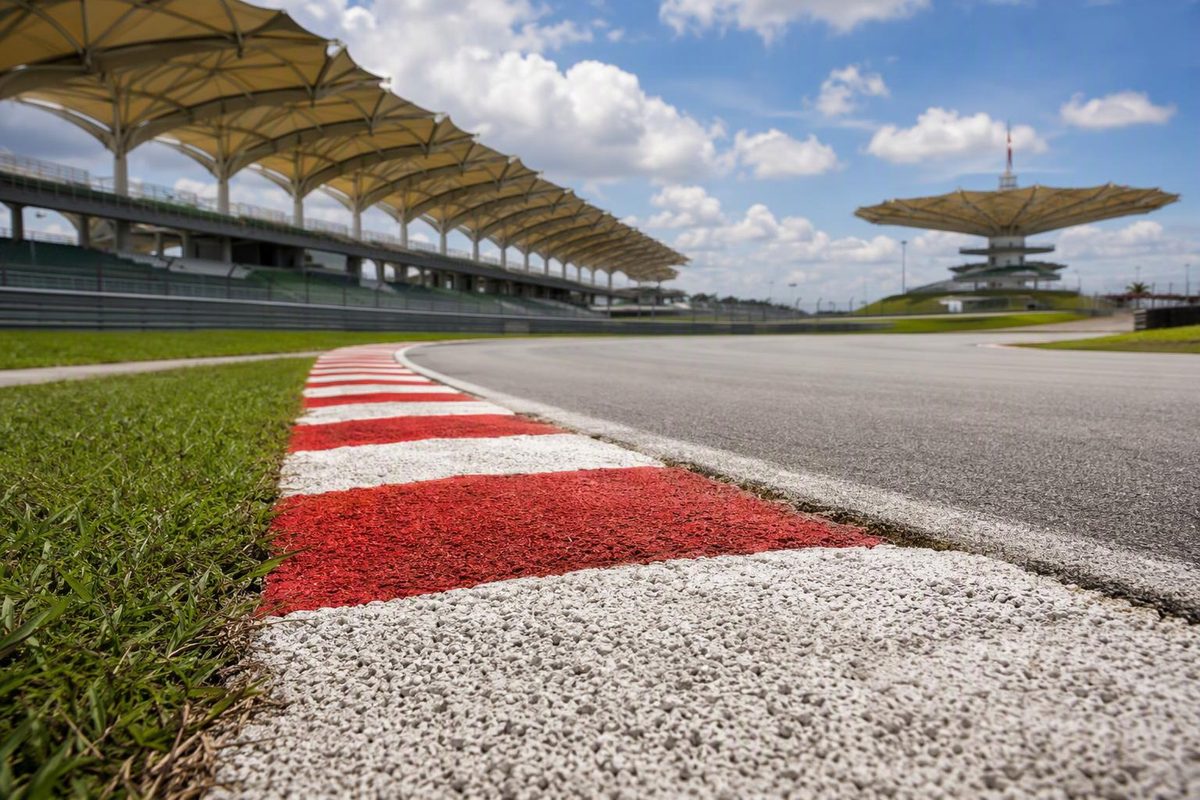
Read F1 circuit data correctly, with selected 2026 track lengths and race laps, the Sepang venue distinction and the race-distance rules.
An F1 circuit’s length measures one lap, not the whole Grand Prix. To identify a track correctly, start with the venue and configuration; then distinguish its lap length from the scheduled race laps and the distance actually completed.
For the season’s round-by-round directory, use the official 2026 F1 calendar. Its event labels are not always enough to identify the circuit: Barcelona-Catalunya and Spain are separate rounds, and the 2026 Bahrain Grand Prix in Malaysia was held at Sepang, as confirmed by the FIA’s final race classification.
Selected 2026 circuits: lengths and laps
These examples show how to read the circuit data on F1’s event pages. They are not a complete calendar list. Each linked page supplies the published lap length and main-race lap count; the latter is not necessarily the number completed in the final result.
| Grand Prix / event label | Circuit | Lap length (km) | Published GP laps |
|---|---|---|---|
| Monaco | Circuit de Monaco | 3.337 | 78 |
| Austria | Red Bull Ring | 4.326 | 71 |
| Spain | Madring | 5.414 | 57 |
| Bahrain GP in Malaysia | Sepang International Circuit | 5.543 | 56 |
Sepang illustrates the distinction between a circuit guide and a result. F1’s event page lists 56 laps, but the FIA’s final classification records 55 laps and 304.874 km. Use the classification when checking what actually happened; the difference alone does not establish why the race was shorter.
Why circuit length changes the lap count
For 2026, Article B2.5.2 sets the normal Grand Prix distance as the fewest complete laps exceeding 305 km. Monaco is the exception, using the fewest complete laps exceeding 260 km. Formation laps behind the safety car can reduce the race lap count, and time limits can end a race before its scheduled distance. These provisions appear in the 2026 sporting regulations, Issue 09.
Using the published Red Bull Ring length, 305 ÷ 4.326 is approximately 70.5 laps. The next complete lap gives a schedule of 71. Monaco’s separate calculation is 260 ÷ 3.337, or approximately 77.9 laps, giving 78.
That is why a shorter circuit can have more laps without having a longer Grand Prix. For the fuller explanation of distance and time limits, see how long a Formula 1 race is.
Do not carry the 2026 lap counts into 2027. Appendix B5 of the same regulations lists an approved change to a 290 km normal race-distance threshold for 2027, retaining Monaco’s 260 km exception. Circuit length and scheduled race distance are separate variables.
A venue name does not describe its whole layout
F1 describes Monaco as an exceptionally narrow circuit where overtaking is difficult. Sepang, by contrast, combines a wide layout, long straights and fast, flowing corners. Similar lap lengths would not make two circuits equivalent tests.
Nor does every venue fit neatly into a street-versus-permanent split. F1 describes Madring as using both public roads and private land, combining street-circuit and permanent-layout characteristics.
When comparing circuit times, record the configuration, session, driver, car and year alongside the lap time. Keep a fastest lap from one race distinct from a race lap record or a qualifying benchmark. The Bahrain lap-record guide provides a separate comparison for readers checking times across configurations.