
How Much Does an IndyCar Weigh? 2026 Minimums Explained
An IndyCar’s 2026 minimum weight is 1,740–1,785 lb without the driver or fuel. See the road, short-oval and speedway figures and what they include.
A 2026 IndyCar has a minimum car weight of 1,785 pounds (809.7 kg) on road and street courses, 1,770 pounds (802.9 kg) on short ovals, and 1,740 pounds (789.3 kg) on speedways. Those are technical-inspection minimums—not the weight of a fueled car with its driver aboard.
The figures come from Rule 14.4.1.1 of the NTT IndyCar Series rulebook, whose captured edition was dated September 10, 2026.
| Event configuration | Minimum car weight | Kilograms* |
|---|---|---|
| Road/street course | 1,785 lb | 809.7 kg |
| Short oval | 1,770 lb | 802.9 kg |
| Speedway | 1,740 lb | 789.3 kg |
*Kilograms are conversions from the regulatory pound figures, rounded to one decimal place.
What the minimum weight includes
The rulebook defines the minimum as the car in ready-to-compete condition but excludes the driver and driver-equivalency weight. It also requires the car to be empty of fuel when weighed. This is why “an IndyCar weighs 1,785 pounds” is incomplete unless the track configuration and weighing basis are stated.
IndyCar separately equalizes driver weight. The combined driver and prescribed driver ballast must reach 185 pounds. A useful minimum-equivalent comparison is therefore:
| Event configuration | Car minimum plus 185-lb driver equivalency |
|---|---|
| Road/street course | 1,970 lb (893.6 kg) |
| Short oval | 1,955 lb (886.8 kg) |
| Speedway | 1,925 lb (873.2 kg) |
These sums explain the regulation; they are not claimed running weights. A car on track also carries fuel and can vary with setup and consumables.
The distinction is enforced in practice. After the 2025 Detroit race, IndyCar said Santino Ferrucci’s car itself was 10 pounds above the 1,785-pound road/street minimum, but its driver ballast was under the separate tolerance. The entry retained second place but lost points and was fined, as RACER’s report quoting the series’ ruling records. In other words, satisfying the car minimum does not cancel a driver-equivalency violation.
Why the number changes by track type
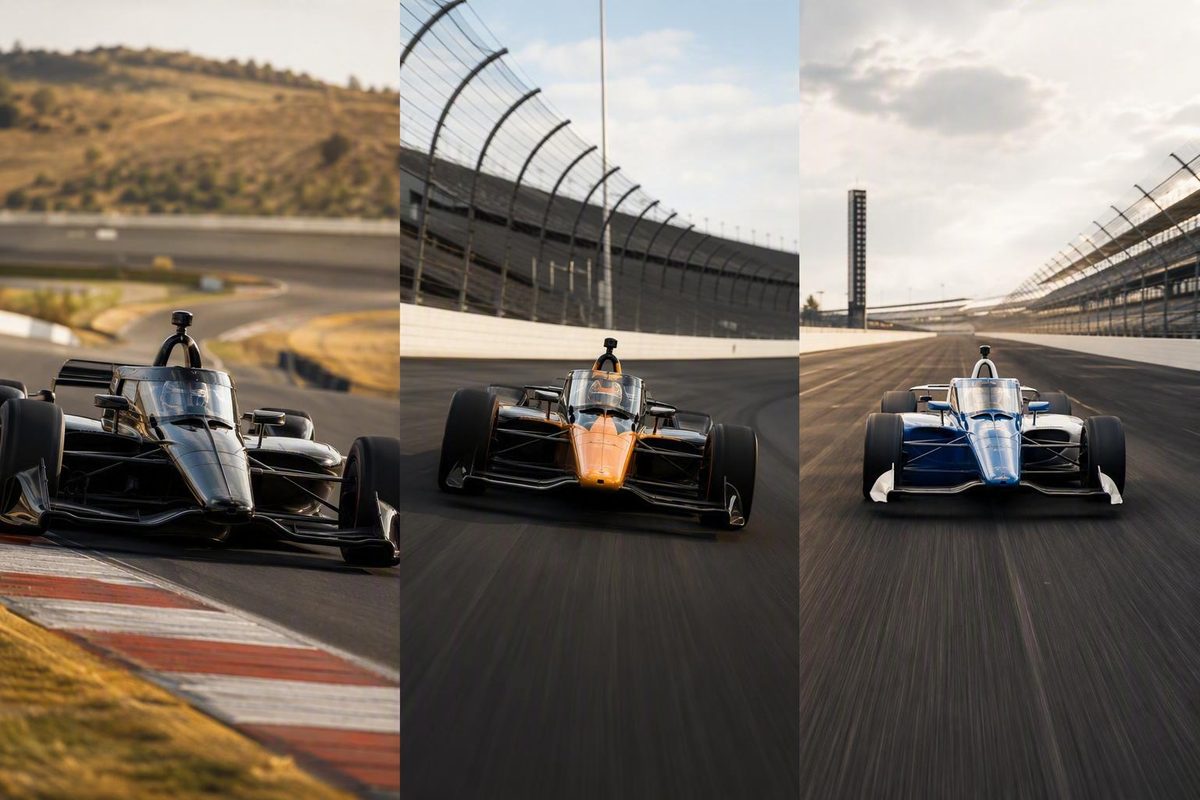
IndyCar does not use one universal minimum because the car runs different aerodynamic configurations across road and street circuits, short ovals and speedways. The series’ own car guide describes larger, high-downforce road/street wings, a balanced short-oval package and smaller, low-drag speedway wings. Every entrant uses the standardized Dallara IR-18 platform, but its track-specific bodywork changes the applicable minimum (IndyCar). For the broader design distinction from Formula 1, see F1 vs IndyCar: Car Design, Tracks and Speed.
Why older IndyCar weight figures may be lower
The current car is heavier than it was before hybridization. When the hybrid system debuted at Mid-Ohio in July 2024, IndyCar said it added 105 pounds and affected weight distribution, balance and handling (IndyCar). Consequently, a pre-hybrid specification or an undated figure should not be treated as the 2026 minimum.
A further change is planned for the next chassis generation. IndyCar says the IR-28, scheduled to race in 2028, is intended to be approximately 100 pounds lighter than the current car. That target is not a current minimum weight, so the 1,740–1,785-pound range remains the relevant answer for the 2026 IR-18.