
The Fuel-Capacity Trade-Off Behind F1’s Proposed 2027 Race Cut
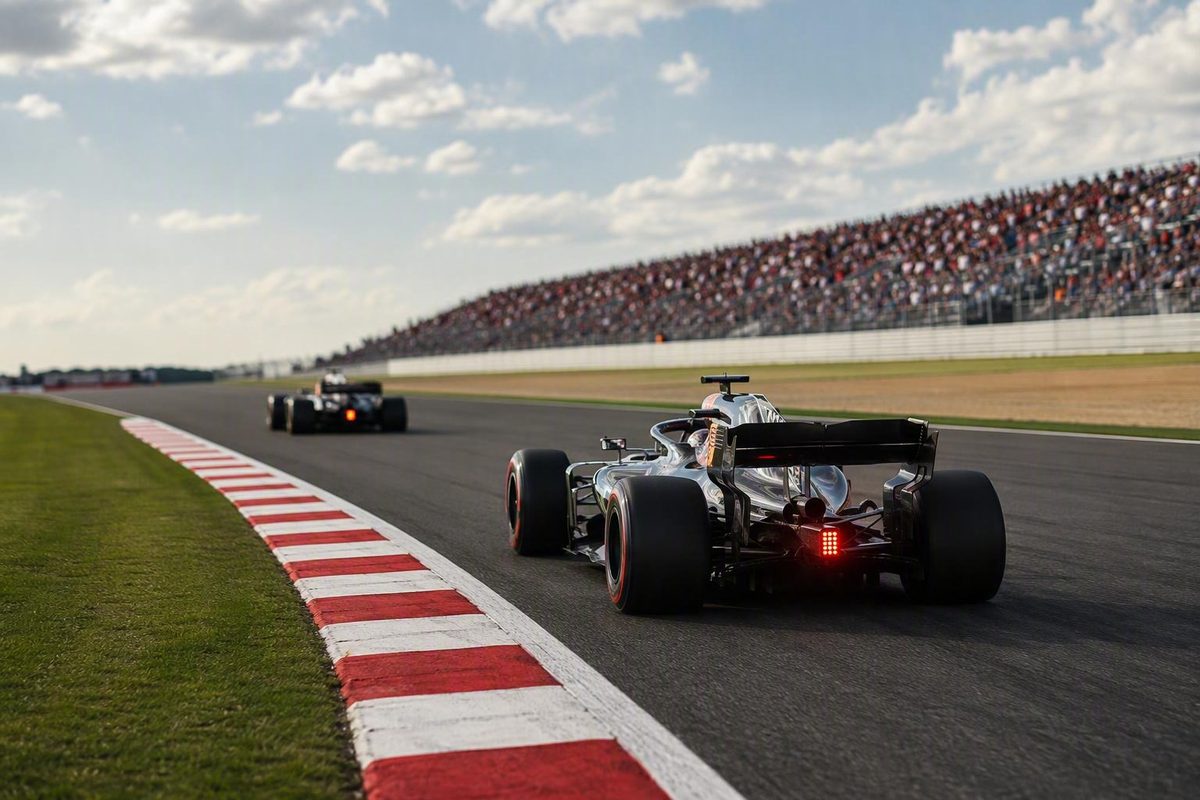
The 305-to-290 km proposal would offset higher fuel demand and avoid major chassis repackaging, but still needs F1 Commission and FIA approval.
Formula 1 is reportedly considering reducing the standard Grand Prix distance in 2027 from approximately 305 km to 290 km. The reported reason is a fuel-range and cost trade-off: proposed higher fuel-flow limits, combined with the intended combustion-engine operating profile, could raise race fuel demand, while larger tanks could require substantial chassis repackaging. A reduction of about 15 km would ease that constraint, but it remains a proposal awaiting formal approval rather than an adopted FIA rule. The Race reports that all 11 teams support the plan and that further regulatory approval is required.
The short answer: it is a fuel-capacity workaround, not a confirmed rule
The reported causal chain begins with the proposed 2027 power-unit adjustment. The concern described in the reporting is that the intended operating profile would increase total fuel demand over a full Grand Prix, particularly at circuits where cars would otherwise need substantial fuel management.
Teams could respond by saving more fuel or carrying more of it. The difficulty is that cars were reportedly designed around their existing tank capacities and packaging. Accommodating significantly more fuel could therefore require associated chassis work, consume development resources and create cost-cap complications.
Shortening the race is being considered as the alternative: reduce the fuel required to reach the finish rather than require substantial car changes for one season.
Proposal status
- Current standard: Approximately 305 km
- Reported proposal: Approximately 290 km
- Difference: Approximately 15 km
- Intended application: 2027
- Status: Awaiting formal approval
Formula One History reports the same distances and says the proposal still requires F1 Commission review followed by FIA World Motor Sport Council ratification. Team support may provide the consensus needed to advance the change, but it does not amend the Sporting Regulations by itself.
What would change from 305 km to 290 km?
A standard Grand Prix does not use a universal lap count. Under the current method, the scheduled distance is the fewest complete laps required to exceed approximately 305 km. Shorter circuits consequently require more laps than longer circuits, as Racing Sheet’s existing race-length explainer details.
The proposed 2027 comparison is:
| Measure | Current standard | Reported proposal | Change |
|---|---|---|---|
| Target distance | Approximately 305 km | Approximately 290 km | −15 km |
| Percentage change | — | — | Approximately −4.9% |
| Likely laps removed | — | — | Roughly 2–4 |
The distances and expected reduction are consistent with The Race’s account of the proposed change. The percentage is a direct calculation: 15 divided by 305 is approximately 4.9%.
That percentage would be common across the standard distance, but the number of laps removed would not be. A circuit with laps close to 7 km might lose around two laps, while one with laps nearer 4–5 km could lose three or four. The exact result would also depend on how the final rule handles whole-lap rounding.
Silverstone illustrates the point without establishing a universal formula. Top Gear reports that the British Grand Prix would fall from 52 laps to 50 under the proposed 290 km standard. Every other venue would require its own calculation using the relevant circuit configuration and final regulatory wording.
This would be a modest reduction rather than a fundamental change of format. The reported proposal removes about 15 km from a standard Grand Prix; it does not bring Sunday races close to the approximately 100 km distance used for Sprints.
Why higher fuel flow creates a race-distance problem
Raising that limit creates the opportunity to use fuel more quickly, but the limit alone does not dictate actual consumption.
The reported range concern arises when the higher permitted rate is combined with an operating plan that expects more contribution from combustion power. If the engine uses more fuel over a lap, completing the same race distance may require more total fuel. At some circuits, reports suggest that existing tank capacity might not cover approximately 305 km without substantial fuel saving.
That leaves four broad responses:
- Save more fuel during the race. Drivers can lift off the throttle earlier, coast or use operating modes that reduce consumption.
- Carry more fuel. This works only if the car has sufficient tank capacity and compatible packaging.
- Redesign the car. Teams can alter the chassis and surrounding component layout to create additional capacity.
- Reduce the required distance. A shorter race lowers total fuel demand without requiring as much saving or additional capacity.
Higher fuel flow therefore does not mechanically force shorter races. It creates a trade-off among consumption, onboard capacity, car design and distance.
This is best understood as a range problem. The car must carry enough fuel to complete the scheduled distance under the expected operating conditions. If expected demand rises while tank capacity remains constrained, F1 must either reduce consumption, increase capacity or shorten the distance.
Why not simply fit a larger fuel tank?
A larger tank sounds like a direct solution, but the reporting characterizes it as a car-packaging issue rather than a straightforward component replacement. Fuel capacity must fit within a tightly integrated design, alongside the chassis and surrounding systems.
Teams had reportedly developed their cars around existing tank dimensions. Making room for substantially more fuel could therefore require broader chassis and packaging changes. That does not mean a larger tank is technically impossible; it means the solution could demand more extensive development than the phrase “fit a larger tank” suggests.
The timing also matters. Work devoted to repackaging a 2027 car would consume development resources and would have to be managed under the financial regulations. Such work may be harder to justify if another power-unit or fuel-flow adjustment follows in 2028.
The 290 km proposal is consequently presented as a transitional compromise. It would reduce the amount of fuel needed to complete a race without requiring every team to undertake major packaging work for 2027. The reporting does not establish the exact changes each car would need, their cost or their effect on competitive performance.
Monaco, final approval, and what happens after 2027
Monaco would reportedly remain near its existing exceptional distance of approximately 260 km rather than losing another 15 km. Its Grand Prix already uses a shorter target because the circuit’s low speeds make the standard distance difficult to complete within the allotted race time. It is an existing exception, not evidence that a 290 km standard has already taken effect elsewhere.
For the broader proposal to become binding, the reporting describes two further stages:
- Consideration and approval by the F1 Commission
- Ratification by the FIA World Motor Sport Council
Speedcafe reports both that approval path and Monaco’s continued exception. It also describes the shorter standard as a 2027-focused measure while further fuel-flow changes are anticipated for 2028.
That does not establish what will happen after 2027. The standard distance could return to approximately 305 km if the underlying constraint is resolved, remain near 290 km if the issue persists, or be replaced by another solution. None of those outcomes is confirmed by the supplied reporting.
The established picture is therefore limited but clear: the reported 15 km cut is a response to anticipated fuel demand and the cost of repackaging the cars, not a wholesale reinvention of the Grand Prix format. For now, approximately 290 km remains a proposal, Monaco remains an existing exception, and the definitive position must come from final FIA approval and regulation text.