
IndyCars Can Reach 240 MPH, but the Record Is a Lap Average
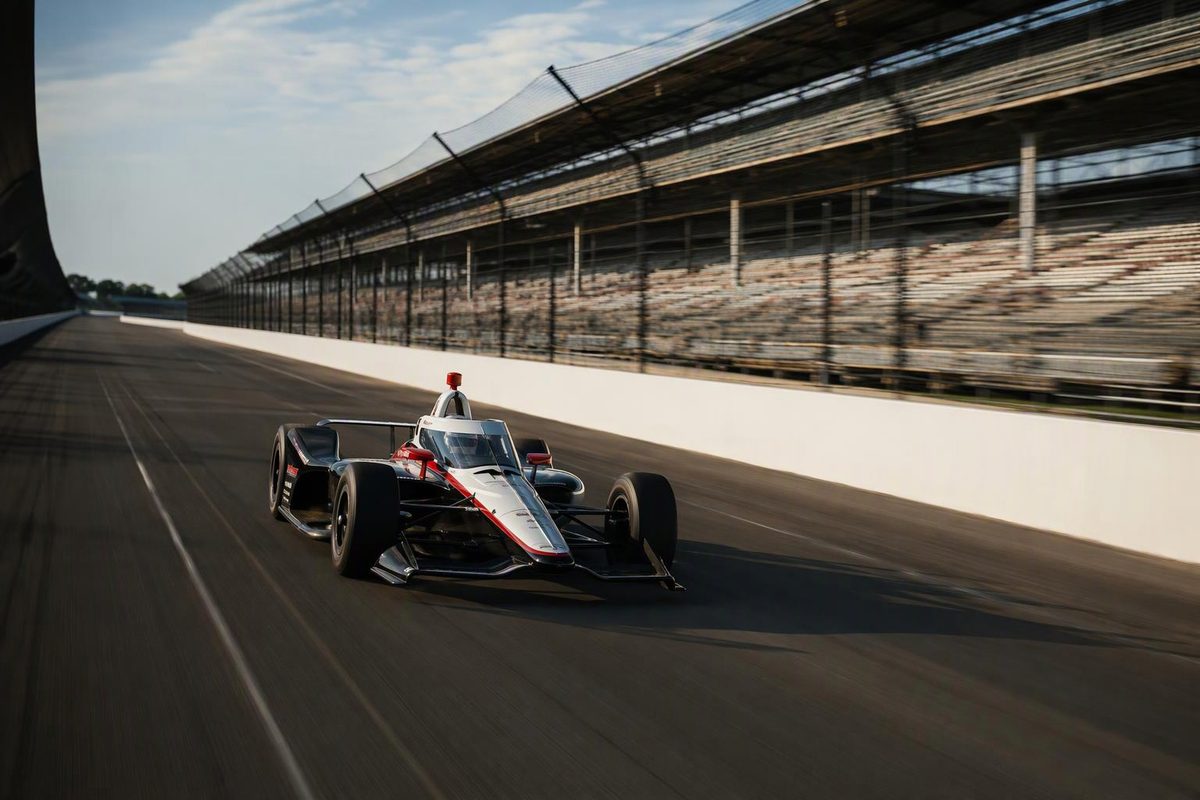
IndyCars exceed 230 mph at Indianapolis and have recorded 240 mph trap speeds. Here is how those figures differ from the 241.428 mph lap record.
An Indy car can reach about 240 mph (386 km/h) on a superspeedway. Current cars more commonly demonstrate their speed at Indianapolis with lap averages above 230 mph, while a trap speed records only a brief peak at one point on the track.
The fastest historical figure is 241.428 mph (388.541 km/h). Gil de Ferran set that average over a qualifying lap at California Speedway in 2000. It came in CART-era machinery rather than the current NTT IndyCar Series car.
IndyCar speed figures compared
| Measurement | Speed | What it measures |
|---|---|---|
| Documented Indianapolis trap speed | 240 mph (386 km/h) | Speed at one timing point during 2017 practice |
| 2026 Indianapolis Fast Friday lap | 233.372 mph (375.576 km/h) | Average around one 2.5-mile lap, aided by a tow |
| 2026 Indianapolis pole run | 232.248 mph (373.767 km/h) | Average across four qualifying laps |
| Indianapolis qualifying record | 237.498 mph (382.216 km/h) | One official qualifying lap, set in 1996 |
| De Ferran closed-course record | 241.428 mph (388.541 km/h) | One qualifying-lap average at Fontana in 2000 |
The everyday answer is therefore about 240 mph, but the other figures show whether the number is a momentary reading or an average maintained around one or more complete laps.
How fast is a current IndyCar?
IndyCar says its low-drag superspeedway configuration allows cars to negotiate the long corners at speeds that often exceed 230 mph. The same car uses different aerodynamic configurations on superspeedways, short ovals, road courses and street circuits, so there is no single useful top speed for every event.
As of 2026, the series uses the Dallara IR-18 chassis with a 2.2-liter twin-turbo V6 and hybrid system, according to IndyCar’s car overview.
The 2026 Indianapolis 500 supplies a current benchmark. Felix Rosenqvist led Fast Friday with a 233.372 mph lap that benefited from an aerodynamic tow. Scott McLaughlin recorded the fastest no-tow lap at 232.674 mph. The engines had approximately 100 additional horsepower because boost was raised for qualifying practice and qualifying, IndyCar reported in its Fast Friday recap.
Alex Palou then won pole with a 232.248 mph four-lap average. That is a better measure of sustained solo speed than one drafted practice lap: Indianapolis qualifying requires a car to maintain its pace over 10 miles. The official qualifying report records Palou’s average.
Why 241.428 mph is not the Indy 500 record
De Ferran’s 241.428 mph lap was set at California Speedway, also known as Fontana, in 2000. IndyCar identifies it as the closed-course land-speed record and said in its 2023 account of de Ferran’s career that the mark still stood.
Two qualifications matter when that number is called “the fastest IndyCar speed”:
- De Ferran drove a CART-era car built to different regulations.
- The 241.428 mph figure was his average for an entire lap, not his highest speed at one point.
His peak speed on the straights must therefore have been higher than the lap average, but the cited record does not establish that peak.
Indianapolis has its own records. Arie Luyendyk’s official 1996 marks are 237.498 mph for one lap and 236.986 mph across four laps. Indianapolis Motor Speedway’s qualifying record table lists both, along with his 37.895-second time for the 2.5-mile record lap.
Trap speed, lap average and race average
A trap speed measures the car at a specific timing point, usually near the end of a straight. It can be higher than the lap average because the car also has to negotiate the corners. In 2017 Indianapolis practice, Takuma Sato registered a 240 mph trap speed, while his fastest complete lap averaged 231.969 mph, according to IndyCar’s session report.
A qualifying average covers one or more full laps and is the more useful measure of sustained speed.
A race average is lower because it incorporates the winner’s entire race time, including caution laps, pit stops and periods of fuel saving. The winner of the 2026 Indianapolis 500 averaged 162.021 mph in a race featuring seven caution periods; IndyCar’s race report also describes leaders lapping about 10 mph below the chasing pack to save fuel. Historical winner averages are listed in our Indy 500 speed data.
So, 240 mph is a reasonable shorthand for an Indy car’s peak speed, while 230-plus mph describes a current sustained superspeedway lap. Neither should be confused with a race average or with speed on a road or street circuit. For the broader performance distinction, see F1 vs IndyCar.